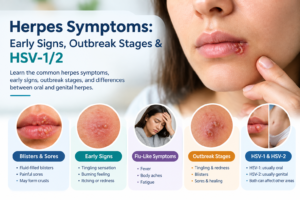
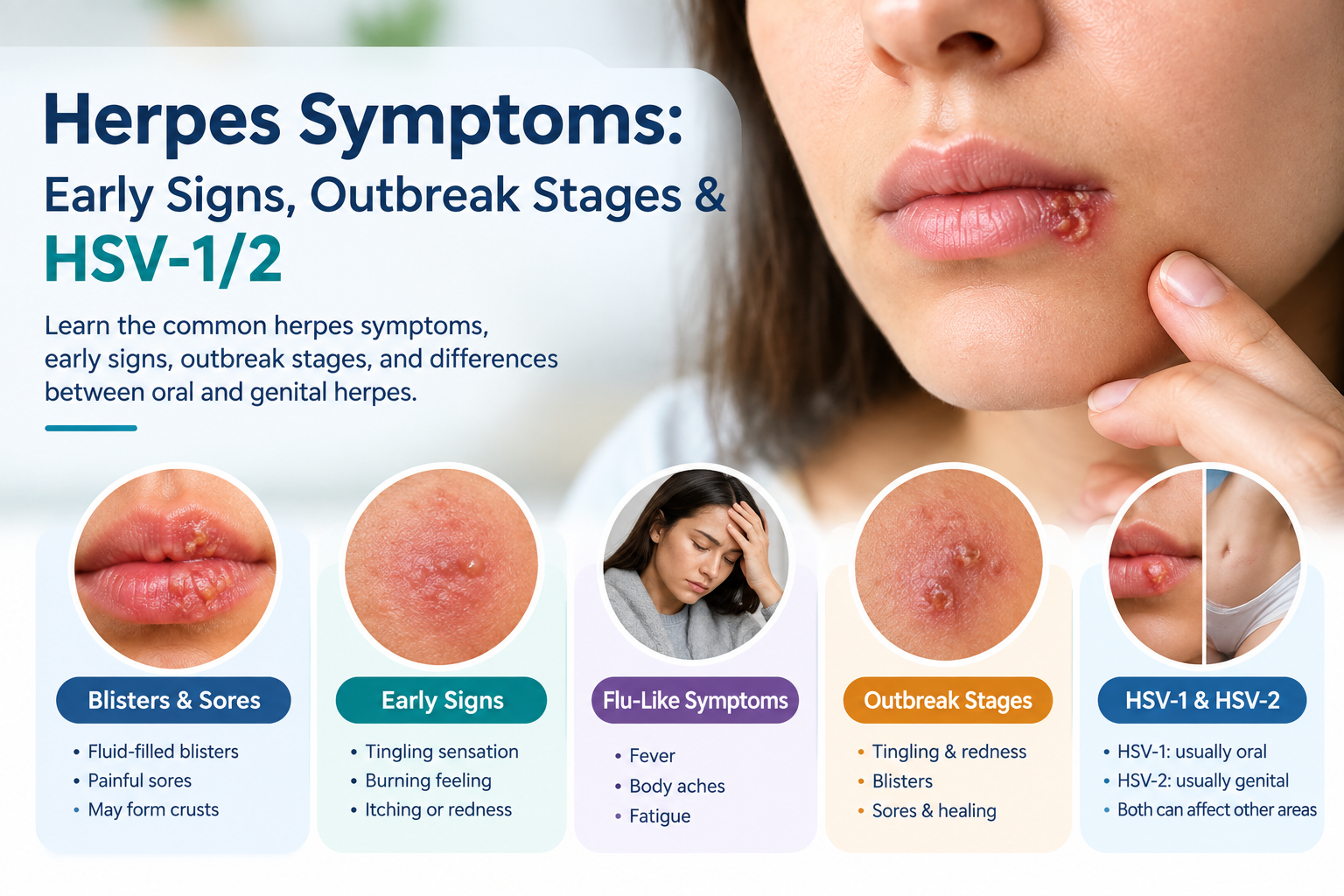
Herpes symptoms can appear differently depending on the type of infection. The condition is caused by the herpes simplex virus (HSV), which includes HSV-1 and HSV-2.
Many people with herpes have no noticeable symptoms. Others may experience outbreaks with painful sores, blisters, itching, or burning sensations.
When symptoms appear, they often develop around the mouth, lips, genitals, or nearby skin areas. Early warning signs may begin before visible sores appear.
Common herpes symptoms include:
- Small fluid-filled blisters
- Painful herpes sores
- Tingling or burning sensations
- Skin itching or irritation
- Flu-like symptoms during first outbreaks
- Swollen lymph nodes in some cases
Herpes outbreaks usually happen in stages. Understanding these stages can help identify early signs and seek appropriate medical guidance.
The two main types of herpes infection include:
- Oral herpes (commonly HSV-1): Usually affects the lips, mouth, and surrounding areas.
- Genital herpes (commonly HSV-2): Usually affects the genital region and nearby skin.
However, both HSV-1 and HSV-2 can infect different body areas depending on exposure.
American Academy of Dermatology
This guide explains herpes symptoms, early signs, outbreak stages, oral herpes symptoms, genital herpes symptoms, and differences between HSV-1 and HSV-2.
What Are the Symptoms of Herpes?
Herpes symptoms can vary from person to person. Some people notice visible outbreaks, while others experience no symptoms at all. The herpes simplex virus (HSV) can remain inactive in the body and may only cause occasional outbreaks.
When symptoms appear, they usually affect the area where the virus entered the body. Common locations include the lips, mouth, genitals, buttocks, and nearby skin areas.
American Academy of Dermatology
The most common symptoms of herpes include:
- Fluid-filled herpes blisters
- Painful herpes sores
- Tingling or burning sensations
- Itching around the infected area
- Redness and skin irritation
- Flu-like symptoms during the first outbreak
The severity of symptoms depends on factors like immune health, virus type, and whether it is the first infection or a recurring outbreak.
Common Signs and Symptoms of Herpes Infection
1. Herpes Blisters and Sores
One of the most recognized signs of herpes is the appearance of small fluid-filled blisters. These blisters often develop in clusters and may become painful over time.
The blisters can break open and form shallow ulcers or herpes sores. These sores may release fluid before developing a crust during the healing process.
American Academy of Dermatology
Common areas where sores appear include:
- Lips and mouth area
- Inside the mouth
- Genital region
- Buttocks or thighs
- Around the anus
The location depends on whether the infection is oral herpes or genital herpes.
2. Tingling, Burning, and Itching Before an Outbreak
Many people experience warning signs before visible sores appear. These early sensations are called prodrome symptoms.
The first signs of herpes may include:
- Tingling feeling on the skin
- Burning sensation
- Mild itching
- Increased sensitivity
- Pain around the affected area
These symptoms may appear hours or days before a herpes outbreak begins. Recognizing these early symptoms can help people understand when an outbreak may be developing.
3. Flu-Like Symptoms During the First Outbreak
A first herpes outbreak can sometimes cause symptoms similar to the flu. These symptoms happen because the immune system responds to the new HSV infection.
Possible symptoms include:
- Fever
- Body aches
- Headache
- Fatigue
- Swollen lymph nodes
These symptoms are more common during an initial outbreak and are usually less noticeable during future outbreaks.
4. Pain or Discomfort Around the Infection Area
Herpes outbreaks can cause discomfort before and during sore development.
People may experience:
- Skin tenderness
- Painful sores
- Burning while urinating
- Discomfort during daily activities
Genital herpes symptoms may include pain during urination when sores affect sensitive areas.
American Academy of Dermatology
5. Mild Symptoms or No Visible Symptoms
Many people with HSV infection never notice clear symptoms. Some only experience very mild signs that may look like another skin condition.
Herpes symptoms can sometimes be confused with:
- Pimples
- Ingrown hairs
- Minor skin irritation
- Common mouth ulcers
Because symptoms can be subtle, testing may be needed for confirmation.
Key Takeaway
The main herpes symptoms include blisters, sores, itching, burning, and tingling sensations. However, symptoms differ between HSV-1 (often linked with oral herpes) and HSV-2 (often linked with genital herpes).
Understanding these signs can help identify possible outbreaks and encourage timely medical advice when needed.
Early Signs of Herpes Before an Outbreak
The early signs of herpes can develop before blisters or sores become visible. These warning symptoms are often described medically as the prodrome stage.
Prodrome symptoms occur when the herpes simplex virus becomes active before visible lesions develop. However, not everyone experiences noticeable warning signs before every herpes outbreak.
The first signs of herpes may include:
- Tingling around the affected skin area
- Mild itching that develops without another obvious cause
- Burning or unusual warmth around the infection site
- Localized pain, tenderness, or increased skin sensitivity
- Small areas of redness before visible blisters develop
These sensations can occur around the lips during oral herpes outbreaks. Similar warning symptoms may develop around genital areas with genital herpes.
Stage 1: Warning Signs and Prodrome Symptoms
A herpes outbreak may begin with tingling, itching, burning, or localized discomfort. These sensations sometimes develop before any obvious changes appear on the skin.
For oral herpes, tingling commonly develops around the lips or nearby facial skin. Genital outbreaks may cause similar sensations around the genitals, buttocks, or thighs.
Recognizing these early symptoms of herpes does not confirm an HSV infection. Other skin conditions can produce similar itching, burning, or tenderness.
Stage 2: Redness and Small Bumps Appear
Visible skin changes may follow the initial tingling or burning sensations. Small bumps can develop around the area where an outbreak is occurring.
Early skin changes may include:
- Localized redness or mild swelling around the affected area
- Small raised bumps that may later become fluid-filled blisters
- Tender skin that feels uncomfortable when touched or rubbed
- Clusters of lesions developing close to the infection site
The early stages of herpes are sometimes difficult to identify visually. Pimples, folliculitis, irritation, and ingrown hairs can resemble early herpes lesions.
Stage 3: Herpes Blisters Begin to Form
Small bumps may develop into fluid-filled herpes blisters as the outbreak progresses. These blisters frequently appear together rather than as one isolated lesion.
Blisters can become painful, sensitive, or uncomfortable during this active outbreak stage. Their location depends partly on the affected body area and HSV infection site.
With lip herpes, blisters commonly develop around the lips and surrounding skin. Genital herpes lesions may appear around genital, anal, or nearby skin areas.
Stage 4: Blisters Open and Become Herpes Sores
Herpes blisters can rupture and leave shallow, painful sores on affected skin. These open lesions gradually heal as the body’s immune response controls the outbreak.
During healing, sores may dry, crust, or develop scabs depending on location. Healing time varies between individuals and between first and recurrent herpes outbreaks.
A first outbreak may be more extensive than later recurring episodes. However, symptom severity and outbreak patterns vary considerably between people.
Can Early Herpes Symptoms Occur Without Blisters?
Yes. An HSV infection does not always produce obvious blisters or recognizable sores. Some people experience extremely mild symptoms, while others notice no symptoms.
This makes symptom-based identification unreliable for confirming HSV-1 or HSV-2 infection. A healthcare professional can determine whether testing is appropriate for suspected herpes.
Important: Early Symptoms Do Not Confirm Herpes
Tingling, redness, itching, or genital irritation can have many possible causes. These symptoms should not automatically be assumed to represent a herpes infection.
When fresh sores or blisters are present, clinicians may collect samples for testing. Medical evaluation becomes particularly important during a suspected first genital herpes outbreak.
Key takeaway: The beginning of a herpes outbreak may involve tingling, burning, itching, or tenderness. Blisters and sores can follow, but some HSV infections remain mild or completely unnoticed.
What Does Herpes Look Like?
Understanding what herpes looks like can help people recognize possible symptoms. However, appearance alone cannot confirm a herpes infection because several skin conditions may look similar.
Herpes lesions usually begin as small red areas or bumps. These areas may develop into grouped, fluid-filled herpes blisters that eventually become painful sores.
The appearance of herpes can change throughout an outbreak:
- Early stage: Redness, itching, tingling, or small bumps
- Active stage: Clusters of fluid-filled blisters
- Sore stage: Open painful ulcers after blisters break
- Healing stage: Drying, crusting, and gradual skin recovery
The exact appearance depends on the infection location, immune response, and whether it is a first outbreak or a recurring episode.
H3: What Do Herpes Blisters Look Like?
Herpes blisters are usually small and appear in groups rather than as a single bump. They may contain clear fluid and feel painful or sensitive.
Common characteristics of herpes blisters include:
- Small clustered fluid-filled bumps
- Red or irritated skin around the area
- Burning or painful sensations
- Tenderness when touched
- Blisters that break into sores
After the blisters open, they can form shallow ulcers known as herpes sores. These sores gradually heal as the skin repairs itself.
H3: What Does Oral Herpes Look Like?
Oral herpes usually affects the lips, mouth, and surrounding facial areas. It is commonly associated with HSV-1, although HSV-2 can also affect oral areas.
Common signs of oral herpes include:
- Small blisters around the lips
- Painful sores near the mouth
- Burning or tingling before lesions appear
- Redness around the affected skin
- Discomfort while eating or drinking
People often refer to oral herpes outbreaks as cold sores or fever blisters. These outbreaks may occur on the lips, gums, tongue, or inside the mouth.
H3: What Does Herpes on the Lips Look Like?
Lip herpes commonly begins with a tingling or burning sensation before visible changes appear.
The typical progression may include:
- Tingling or itching around the lip area
- Small red bumps appearing on the skin
- Fluid-filled blisters forming in clusters
- Blisters breaking into painful sores
- Crusting and healing of the affected area
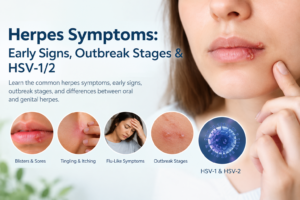
Searching for herpes on lips pictures can provide general visual examples, but images cannot replace professional diagnosis.
H3: What Does Genital Herpes Look Like?
Genital herpes may appear around the genitals, buttocks, thighs, or anal area. It can be caused by HSV-1 or HSV-2.
Possible visible symptoms include:
- Small grouped blisters
- Red or irritated skin
- Open sores after blisters break
- Tender areas around the infection site
- Healing lesions during recovery
Some people experience genital herpes symptoms without visible sores. Mild irritation or discomfort may be the only noticeable sign.
H3: Herpes vs Other Similar Skin Conditions
Herpes symptoms can sometimes look similar to other common skin problems. Understanding differences can help avoid confusion.
| Condition | Common Appearance |
| Herpes | Grouped fluid-filled blisters that become sores |
| Pimples | Individual raised bumps with possible pus |
| Canker sores | Painful mouth ulcers without external blisters |
| Ingrown hairs | Small irritated bumps around hair follicles |
| Skin irritation | Redness without typical blister clusters |
Because many conditions can appear similar, medical testing is the most reliable way to confirm an HSV infection.
H3: When Should You Seek Medical Advice?
Consider speaking with a healthcare professional if you notice:
- New unexplained genital sores
- Painful mouth or lip blisters
- A first suspected herpes outbreak
- Symptoms during pregnancy
- Severe pain or repeated outbreaks
Early medical advice can help with accurate diagnosis and understanding available treatment options.
Key takeaway: Herpes often appears as grouped blisters that become sores during an outbreak. The appearance can vary between oral herpes, genital herpes, HSV-1, and HSV-2 infections, so professional evaluation may be needed for confirmation.
Oral Herpes Symptoms (HSV-1)
Oral herpes is a common infection caused by the herpes simplex virus (HSV). It most commonly involves HSV-1, which usually affects the mouth, lips, and surrounding facial areas.
Many people with HSV-1 infection experience mild symptoms or no noticeable symptoms. When an outbreak occurs, it can cause visible sores, discomfort, and irritation around the mouth.
Oral herpes symptoms may appear in different stages. Some people notice warning signs before sores develop, while others only notice visible lesions.
Common oral herpes symptoms include:
- Tingling or burning around the lips
- Small fluid-filled blisters
- Painful mouth sores
- Redness or swelling near the infection area
- Mouth discomfort during eating
- Tender skin around the lips
H3: Early Signs of Oral Herpes
The first signs of oral herpes often appear before visible sores develop. These early symptoms happen when HSV becomes active near the affected area.
Common early symptoms include:
- Tingling sensation around the lips
- Itching or irritation near the mouth
- Burning feeling on the skin
- Increased sensitivity around the affected area
- Mild pain before blister formation
These symptoms may appear hours or days before an oral herpes outbreak becomes visible.
Recognizing these early signs can help people understand possible outbreak patterns. However, these symptoms alone cannot confirm an HSV infection.
H3: Herpes on Lips and Around the Mouth
Lip herpes commonly appears around the border of the lips. It may also affect nearby facial skin, especially during an active outbreak.
A typical lip herpes outbreak may progress through these stages:
- Initial tingling or burning sensation
- Small red spots or bumps appearing
- Groups of fluid-filled blisters forming
- Blisters breaking into painful sores
- Healing with gradual skin recovery
The sores may cause discomfort while speaking, eating, or touching the affected area.
H3: Mouth Herpes Symptoms Inside the Mouth
Although oral herpes commonly affects the lips, it can also involve areas inside the mouth.
Herpes in mouth symptoms may include:
- Painful sores on gums or mouth tissues
- Irritation inside the cheeks
- Blisters near the mouth opening
- Pain while chewing or swallowing
- Increased mouth sensitivity
A first HSV-1 infection may sometimes cause more widespread mouth symptoms. Recurring outbreaks are often shorter and more localized.
H3: Oral Herpes vs Cold Sores
The terms cold sores and oral herpes are often used together. Cold sores are typically caused by HSV-1 and appear as small clusters of painful blisters.
Oral herpes can include:
- Cold sores around the lips
- Mouth lesions
- Gum irritation
- Facial skin outbreaks
Not every mouth sore is caused by herpes. Conditions such as canker sores, injuries, or irritation can create similar symptoms.
H3: How HSV-1 Causes Oral Herpes Outbreaks
After infection, HSV-1 remains inside the body’s nerve cells. The virus can become active again under certain conditions.
Common outbreak triggers may include:
- Physical or emotional stress
- Illness or reduced immune function
- Excessive sun exposure
- Lack of sleep
- Hormonal changes
The frequency of outbreaks differs from person to person. Some individuals experience occasional outbreaks, while others rarely notice symptoms.
H3: Can Oral Herpes Spread Without Visible Symptoms?
Yes, HSV-1 can sometimes spread even when no visible sores are present. This is known as asymptomatic viral shedding.
Transmission may occur through contact involving infected areas, including:
- Kissing
- Direct contact with active sores
- Oral contact during sexual activity
Avoiding direct contact during active outbreaks can reduce the chance of transmission.
Key Takeaway
Oral herpes symptoms commonly include lip blisters, mouth sores, tingling, burning, and irritation caused by HSV-1. Some people experience clear outbreaks, while others may have mild or unnoticed symptoms.
Understanding the signs of mouth herpes, lip herpes, and HSV-1 infection can help people recognize possible outbreaks and seek appropriate medical guidance.
Genital Herpes Symptoms (HSV-1 & HSV-2)
Genital herpes is a common infection caused by the herpes simplex virus (HSV). It mainly affects the genital area, but symptoms can also appear around the thighs, buttocks, or anal region.
Genital herpes is commonly associated with HSV-2, although HSV-1 can also cause genital infections. The symptoms may vary widely depending on the person’s immune response and previous exposure to HSV.
Some people experience noticeable outbreaks with sores and blisters. Others may have mild symptoms that are difficult to recognize.
Common genital herpes symptoms include:
- Painful genital sores
- Small fluid-filled blisters
- Itching or burning sensations
- Redness and skin irritation
- Pain while urinating
- Tenderness around affected areas
H3: Early Signs of Genital Herpes
The first signs of herpes in the genital area may appear before visible sores develop. These early warning symptoms are often caused by increased viral activity near the affected nerves.
Early genital herpes symptoms may include:
- Tingling around the genital area
- Burning sensations on the skin
- Itching or irritation
- Unusual sensitivity or discomfort
- Mild pain near the outbreak area
These symptoms may occur shortly before blisters appear. However, similar symptoms can happen with other infections or skin conditions.
H3: What Does a Genital Herpes Outbreak Look Like?
A genital herpes outbreak often develops in stages. The appearance can change as the infection progresses.
A typical outbreak may include:
Stage 1: Initial Skin Changes
The affected area may become:
- Red
- Sensitive
- Itchy
- Slightly swollen
These changes may happen before visible sores appear.
Stage 2: Herpes Blisters Develop
Small groups of fluid-filled blisters may form around the genital area.
These blisters may:
- Feel painful or sensitive
- Appear in clusters
- Cause discomfort during movement
Stage 3: Herpes Sores Appear
The blisters may break open and create shallow ulcers. These herpes sores can cause pain and irritation.
Stage 4: Healing Process
The sores gradually heal as the skin repairs itself. Future outbreaks are often shorter than the first episode.
H3: Symptoms of Genital Herpes in Men
The signs of herpes in men can appear on different areas depending on exposure.
Common symptoms may include:
- Sores on the penis
- Blisters around the genital area
- Burning during urination
- Itching or irritation
- Pain near affected skin areas
Some men may experience mild symptoms that resemble other common skin problems. Testing may be needed for accurate diagnosis.
H3: Symptoms of Genital Herpes in Women
Herpes signs in women may appear around external or internal genital areas. Symptoms can sometimes be more difficult to notice.
Possible symptoms include:
- Blisters around the vulva
- Painful sores near the genital area
- Burning while urinating
- Vaginal discomfort
- Pelvic discomfort during some outbreaks
Women may also experience symptoms outside the genital area, including the buttocks or upper thighs.
H3: First Genital Herpes Outbreak Symptoms
The first outbreak is often more noticeable because the immune system has not previously responded to the virus.
A first outbreak may include:
- Multiple painful sores
- Strong itching or burning sensations
- Fever
- Body aches
- Fatigue
- Swollen lymph nodes
Later outbreaks may become less severe because the immune system recognizes the virus.
H3: Can Genital Herpes Occur Without Sores?
Yes, genital herpes can exist without visible sores. Some people experience mild symptoms or no noticeable signs.
Possible hidden symptoms include:
- Mild itching
- Occasional irritation
- Short periods of discomfort
- Unexplained skin sensitivity
Because symptoms may not always appear clearly, medical testing is important when herpes is suspected.
Key Takeaway
Genital herpes symptoms can include blisters, painful sores, itching, burning, and discomfort around the genital region. Both HSV-1 and HSV-2 can cause genital herpes infections.
Recognizing early signs, outbreak stages, and symptom patterns can help people understand possible HSV infections and discuss concerns with a healthcare professional.
HSV-1 vs HSV-2 Symptoms: What Is the Difference?
The herpes simplex virus (HSV) has two main types: HSV-1 and HSV-2. Both types can cause similar symptoms, including blisters, sores, itching, and discomfort.
The main difference is where these infections commonly appear. HSV-1 is often linked with oral herpes, while HSV-2 is more commonly associated with genital herpes.
However, either virus type can infect the mouth or genital area. The location depends on how the infection was transmitted.
H3: What Is HSV-1?
HSV-1, also called herpes simplex type 1, is commonly associated with oral infections.
It is the most common cause of:
- Oral herpes
- Cold sores
- Lip herpes
- Mouth sores
HSV-1 symptoms often appear around the mouth and lips. Some people experience repeated outbreaks, while others never develop noticeable symptoms.
Common HSV-1 symptoms include:
- Tingling around the lips
- Small mouth blisters
- Painful lip sores
- Mouth irritation
- Burning sensations before outbreaks
HSV-1 can also cause genital infections through oral-to-genital contact.
H3: What Is HSV-2?
HSV-2, also called herpes simplex type 2, is commonly associated with genital infections.
It is a major cause of:
- Genital herpes
- Genital sores
- Recurrent outbreaks
Common HSV-2 symptoms include:
- Painful genital blisters
- Genital sores
- Itching or burning
- Pain during urination
- Skin irritation around affected areas
Some people with HSV-2 have mild symptoms that may go unnoticed.
H3: HSV-1 vs HSV-2 Symptoms Comparison
| Feature | HSV-1 | HSV-2 |
| Common name | Oral herpes virus | Genital herpes virus |
| Common location | Mouth and lips | Genital area |
| Main symptoms | Cold sores and mouth blisters | Genital sores and irritation |
| Outbreak frequency | Often fewer recurrences | Often more recurring outbreaks |
| Transmission | Oral contact and skin contact | Mainly sexual skin-to-skin contact |
H3: Can HSV-1 Cause Genital Herpes?
Yes, HSV-1 can cause genital herpes. Although HSV-1 commonly affects the mouth, it can spread to genital areas through oral contact.
Genital HSV-1 infections may cause:
- Genital blisters
- Painful sores
- Burning sensations
- Local irritation
However, genital HSV-1 often has fewer recurring outbreaks compared with genital HSV-2.
H3: Can HSV-2 Cause Oral Herpes?
Yes, HSV-2 can infect oral areas, although this is less common. The symptoms may resemble other oral herpes infections.
Possible symptoms include:
- Lip blisters
- Mouth sores
- Oral discomfort
- Tingling before outbreaks
Testing is required to determine the exact HSV type causing an infection.
H3: Difference Between HSV-1 and HSV-2 Outbreak Patterns
The frequency and severity of outbreaks can differ between HSV types.
HSV-1 commonly causes:
- Occasional oral outbreaks
- Cold sores around the lips
- Longer periods without symptoms
HSV-2 commonly causes:
- More frequent genital outbreaks
- Repeated genital symptoms
- Recurring irritation or sores
However, outbreak patterns vary between individuals. Some people with either HSV type may have frequent symptoms, while others may never experience visible outbreaks.
H3: How Are HSV-1 and HSV-2 Diagnosed?
Symptoms alone cannot always identify whether an infection is caused by HSV-1 or HSV-2.
Healthcare professionals may use:
- Swab testing from active sores
- Blood tests for HSV antibodies
- Medical evaluation of symptoms
Accurate diagnosis helps determine the type of infection and appropriate management options.
Key Takeaway
HSV-1 and HSV-2 are both types of herpes simplex virus infections. HSV-1 is commonly linked with oral herpes, while HSV-2 is commonly linked with genital herpes.
Both viruses can cause similar symptoms, including herpes blisters, herpes sores, itching, and burning sensations. Understanding the differences helps people recognize possible symptoms and seek proper medical advice.
What Does a Herpes Outbreak Feel Like?
A herpes outbreak can feel different for each person. Some people notice strong discomfort, while others experience very mild symptoms or no noticeable changes.
The feeling of an outbreak often depends on whether it is the first infection or a recurring episode. A first outbreak may feel more intense because the immune system is responding to the virus for the first time.
Many people describe a herpes outbreak as a combination of:
- Tingling or unusual sensations
- Burning or itching
- Skin sensitivity
- Pain around affected areas
- Discomfort from developing sores
Understanding these sensations can help recognize possible herpes outbreak symptoms before visible signs appear.
H3: How Does Herpes Feel Before an Outbreak?
Before visible blisters appear, many people experience early warning sensations. These feelings happen during the initial activation stage of the herpes simplex virus.
Common sensations before an outbreak include:
- Tingling under the skin
- Mild burning feelings
- Itching near the infection area
- Increased skin sensitivity
- Mild discomfort or soreness
These early symptoms are sometimes called the prodrome stage. They may appear hours or days before herpes blisters develop.
H3: What Does a Herpes Outbreak Feel Like During the Active Stage?
During the active stage, symptoms usually become more noticeable. The affected area may feel painful, irritated, or sensitive.
People may experience:
- Painful blisters on the skin
- Burning around open sores
- Tenderness when touching the area
- Discomfort during movement
- Increased irritation near lesions
The discomfort level can vary depending on the outbreak location.
For example:
- Oral herpes may cause lip tenderness or mouth discomfort.
- Genital herpes may cause irritation around sensitive areas.
H3: Does Herpes Always Feel Painful?
No, herpes outbreaks are not always painful. Some people experience only mild symptoms that can be easily overlooked.
A person may notice:
- Slight itching
- Minor irritation
- Small skin changes
- Brief tingling sensations
Others may experience more noticeable symptoms, including painful sores and burning sensations.
The absence of pain does not always mean an HSV infection is not present.
H3: What Does a First Herpes Outbreak Feel Like?
The first herpes outbreak can feel different from later outbreaks. It may involve stronger symptoms because the body has not developed an immune response against the virus.
A first outbreak may include:
- Multiple painful sores
- Strong itching or burning
- Flu-like symptoms
- Fever or fatigue
- Swollen lymph nodes
Some people may also experience emotional stress after noticing unexpected symptoms. Getting medical advice can help provide accurate information and support.
H3: What Does a Recurring Herpes Outbreak Feel Like?
Recurring outbreaks are often shorter and less severe than the first episode. The immune system recognizes the virus and may respond more quickly.
Recurring outbreak sensations may include:
- Mild tingling
- Localized itching
- Small areas of discomfort
- Fewer sores compared with the first outbreak
Some people experience warning sensations without developing visible blisters.
H3: How Long Does a Herpes Outbreak Feel Uncomfortable?
The duration of discomfort varies between individuals. A first outbreak may last longer than recurring episodes.
Generally, symptoms may progress through these stages:
- Early sensations before sores appear
- Blister development
- Open sore formation
- Healing and recovery
The length of an outbreak depends on factors such as immune health, outbreak location, and individual response.
H3: When Should You Get Medical Advice?
Consider contacting a healthcare professional if you experience:
- A first suspected herpes outbreak
- New unexplained genital sores
- Severe pain or discomfort
- Symptoms near the eyes
- Frequent recurring outbreaks
A healthcare professional can recommend appropriate testing and help identify the cause of symptoms.
Key Takeaway
A herpes outbreak may feel like tingling, burning, itching, sensitivity, or pain before sores appear. Some people experience noticeable discomfort, while others have mild or silent HSV infections.
Recognizing these sensations can help identify possible outbreak patterns, but medical testing is needed to confirm herpes.
How Long Do Herpes Symptoms Last?
The duration of herpes symptoms can vary from person to person. The timeline depends on several factors, including whether it is the first outbreak, a recurring outbreak, and the body’s immune response.
A first herpes outbreak is often longer and more noticeable. Recurring outbreaks usually become shorter because the immune system recognizes the herpes simplex virus (HSV).
In general, herpes symptoms may follow this pattern:
- Early warning signs before visible sores
- Blister formation and active outbreak
- Open sores and healing process
- Recovery period without visible symptoms
The exact duration can differ between oral herpes and genital herpes infections.
H3: How Long Does the First Herpes Outbreak Last?
The first herpes outbreak is often the most noticeable episode. This happens because the immune system is encountering HSV for the first time.
A first outbreak may include:
- Tingling and burning sensations
- Multiple herpes blisters
- Painful sores
- Skin irritation
- Flu-like symptoms
The healing process may take longer during the first infection. Some people recover within a few weeks, while others may experience symptoms for a longer period.
H3: How Long Do Recurring Herpes Outbreaks Last?
Recurring outbreaks are usually shorter compared with the first episode. The immune system can respond faster after previous exposure.
A recurring outbreak may involve:
- Early tingling sensations
- Fewer blisters
- Smaller areas of irritation
- Faster healing
Some people experience frequent outbreaks, while others may have long periods without symptoms.
H3: Oral Herpes Symptoms Timeline
Oral herpes outbreaks commonly affect the lips and mouth area. A typical outbreak may progress through several stages.
Stage 1: Early Warning Signs
Before visible sores appear, symptoms may include:
- Tingling around the lips
- Burning sensations
- Itching near the mouth
Stage 2: Blister Development
Small groups of fluid-filled blisters may appear around the lips or mouth.
Stage 3: Open Sores
Blisters may break and become painful herpes sores.
Stage 4: Healing
The sores gradually dry, heal, and return to normal skin.
H3: Genital Herpes Symptoms Timeline
Genital herpes symptoms can also develop in stages. The timeline may differ depending on whether it is HSV-1 or HSV-2.
Possible stages include:
Early Stage:
- Tingling
- Itching
- Burning
- Skin sensitivity
Outbreak Stage:
- Genital blisters
- Painful sores
- Local irritation
Healing Stage:
- Sores close and heal
- Discomfort decreases
- Skin returns to normal
H3: Factors That Can Affect Herpes Outbreak Duration
Several factors may influence how long symptoms continue.
Possible factors include:
- Immune system strength
- Stress levels
- Illness or infections
- Sleep quality
- Hormonal changes
- Outbreak location
People with stronger immune responses may experience shorter or milder outbreaks.
H3: Can Herpes Symptoms Come and Go?
Yes, herpes symptoms can appear and disappear over time. HSV remains inside the body after infection and can become active again.
Some people experience:
- Occasional outbreaks
- Long symptom-free periods
- Mild warning sensations without sores
The frequency of outbreaks differs widely among individuals.
H3: When Are Herpes Symptoms Most Contagious?
HSV can spread when active symptoms are present. The highest risk of transmission often occurs when visible sores or blisters appear.
During an outbreak, people should avoid:
- Direct contact with active sores
- Kissing when oral sores are present
- Sexual contact during genital outbreaks
However, HSV can sometimes spread even without visible symptoms due to asymptomatic shedding.
Key Takeaway
The length of herpes symptoms depends on the individual and the type of outbreak. First outbreaks are usually longer, while recurring outbreaks often heal faster.
Understanding the herpes symptoms timeline can help people recognize early signs, outbreak stages, and when professional medical advice may be needed.
What Causes Herpes Outbreaks?
A herpes outbreak happens when the herpes simplex virus (HSV) becomes active again after staying inactive inside the body.
After an HSV infection occurs, the virus remains in nerve cells. Certain physical or environmental factors can trigger the virus to reactivate and cause symptoms.
The main cause of herpes is infection with:
- HSV-1 (herpes simplex type 1), commonly linked with oral herpes
- HSV-2 (herpes simplex type 2), commonly linked with genital herpes
However, both HSV types can affect different body areas depending on how transmission occurs.
H3: How Does Herpes Begin?
Herpes begins when the herpes simplex virus enters the body through direct contact with infected skin or fluids.
The virus can enter through areas such as:
- Lips and mouth tissues
- Genital skin
- Mucous membranes
- Small cuts or breaks in the skin
After entering the body, HSV travels to nearby nerves. The virus can remain inactive and later reactivate, causing a new herpes outbreak.
H3: Common Triggers That Cause Herpes Outbreaks
HSV outbreaks do not always happen randomly. Certain conditions can increase the chance of symptoms appearing.
Common herpes outbreak triggers include:
Stress
Physical or emotional stress can affect the immune system. Some people notice outbreaks during stressful periods.
Stress may contribute to:
- Increased fatigue
- Lower immune response
- More frequent outbreak patterns
Illness or Reduced Immunity
When the immune system is weakened, HSV may become active again.
Possible triggers include:
- Common infections
- Fever
- Physical exhaustion
- Recovery from illness
A strong immune system helps control viral activity.
Sun Exposure
For some people with oral herpes, excessive sunlight can trigger lip outbreaks.
Sun exposure may cause:
- Lip irritation
- Skin sensitivity
- Cold sore development
Using sun protection on the lips may help reduce this trigger for some individuals.
Lack of Sleep and Fatigue
Poor sleep can affect the body’s ability to manage stress and infections.
Possible effects include:
- Increased tiredness
- Reduced immune function
- Higher outbreak sensitivity
Maintaining healthy sleep habits may support overall immune health.
Hormonal Changes
Hormonal changes may influence outbreak patterns in some individuals.
Possible situations include:
- Menstrual cycle changes
- Pregnancy-related changes
- Hormonal fluctuations
The connection varies between individuals.
Skin Irritation or Injury
Damage or irritation near an infected area may sometimes trigger symptoms.
Examples include:
- Lip irritation
- Friction near genital areas
- Skin trauma
The virus may reactivate near the area where symptoms usually occur.
H3: Can Stress Cause Herpes?
Stress does not create a new herpes infection. However, it may trigger outbreaks in people who already have HSV.
When the body experiences ongoing stress, immune responses may change. This can allow the virus to become active again.
Stress-related outbreak patterns may include:
- Increased tingling sensations
- More frequent symptoms
- Longer recovery periods
Managing stress may help some people reduce outbreak frequency.
H3: Can You Get Herpes Without an Outbreak?
Yes, herpes can be transmitted even when visible symptoms are not present.
This happens because HSV may be active on the skin without causing noticeable sores. This process is called asymptomatic shedding.
A person may spread HSV without experiencing:
- Blisters
- Painful sores
- Visible skin changes
This is why understanding HSV transmission is important, even when symptoms are absent.
H3: Does Having Herpes Mean You Will Always Have Outbreaks?
No. Many people with HSV experience few outbreaks or none after the initial infection.
Outbreak patterns can vary:
- Some people have frequent outbreaks
- Some have occasional symptoms
- Some never notice symptoms
The body’s immune response plays an important role in controlling the virus.
Key Takeaway
Herpes outbreaks are caused by the reactivation of HSV inside the body. Triggers such as stress, illness, fatigue, sunlight, and immune changes may contribute to symptom development.
Understanding what causes a herpes outbreak can help people recognize patterns and discuss concerns with a healthcare professional.
Can You Have Herpes Without Symptoms?
Yes, a person can have a herpes simplex virus (HSV) infection without noticeable symptoms. Many people with HSV never experience obvious outbreaks or visible sores.
This type of infection is often called asymptomatic herpes. The virus may remain in the body without causing clear signs, while still being capable of becoming active later.
Some people may have HSV for years without knowing they are infected.
Common reasons herpes may go unnoticed include:
- No visible blisters or sores
- Very mild skin irritation
- Symptoms mistaken for other conditions
- Short outbreaks that heal quickly
Because symptoms are not always obvious, many people discover their HSV status only after testing or a partner’s diagnosis.
H3: Why Does Herpes Sometimes Have No Symptoms?
After entering the body, the herpes simplex virus can remain inactive inside nerve cells. During this inactive period, the virus may not produce noticeable symptoms.
The immune system often controls viral activity. As a result, some people may experience:
- No outbreaks
- Rare mild symptoms
- Occasional unnoticed viral activity
The absence of symptoms does not mean the virus is not present.
H3: Can Herpes Spread Without Visible Sores?
Yes, HSV can sometimes spread without visible sores or blisters. This is known as asymptomatic viral shedding.
During viral shedding, the virus may be present on the skin surface without causing obvious changes.
Transmission can occur even when a person does not notice:
- Herpes blisters
- Herpes sores
- Pain
- Skin irritation
This is one reason herpes can spread between people who are unaware of their infection.
H3: Mild Herpes Symptoms That People May Ignore
Some people experience symptoms that are too mild to recognize as herpes.
Possible mild symptoms include:
- Occasional itching
- Brief tingling sensations
- Small areas of irritation
- Minor redness
- Temporary discomfort
These signs can resemble many other common skin conditions.
For example, mild irritation around the lips may be confused with dryness. Genital discomfort may be mistaken for other infections or skin irritation.
H3: Can You Have HSV-1 Without Cold Sores?
Yes, a person can have HSV-1 without ever developing cold sores.
While HSV-1 commonly causes oral herpes, some infections remain unnoticed.
A person with HSV-1 may never experience:
- Lip blisters
- Mouth sores
- Facial outbreaks
However, the virus can still remain inside the body after infection.
H3: Can You Have HSV-2 Without Genital Herpes Symptoms?
Yes, HSV-2 infections can also occur without noticeable genital herpes symptoms.
Some people may never experience:
- Genital blisters
- Painful sores
- Burning sensations
- Visible outbreaks
Others may have very mild symptoms that appear occasionally.
Testing can help identify HSV-1 or HSV-2 when symptoms are unclear.
H3: How Is Asymptomatic Herpes Diagnosed?
Because symptoms may not appear, diagnosis usually requires medical testing.
Healthcare professionals may use:
- Swab tests from active sores
- Blood tests detecting HSV antibodies
- Medical evaluation of symptoms
Testing decisions depend on individual situations and medical guidance.
H3: Should You Be Concerned About Herpes Without Symptoms?
Having HSV without symptoms is common. Many people live normally with the virus and experience limited or no outbreaks.
Important steps include:
- Understanding transmission risks
- Communicating with partners
- Seeking medical advice when needed
- Following recommended prevention practices
Knowing your HSV status can help make informed health decisions.
Key Takeaway
Herpes can exist without visible symptoms. Many people have an HSV infection but never develop noticeable outbreaks.
However, HSV can sometimes spread without sores because of asymptomatic shedding. Understanding silent herpes infections helps people recognize the importance of testing, awareness, and prevention.
When Should You See a Doctor for Herpes Symptoms?
Knowing when to seek medical advice can help with accurate diagnosis and proper management of a possible HSV infection.
Many herpes symptoms can look similar to other skin conditions. A healthcare professional can evaluate symptoms and recommend appropriate testing when necessary.
You should consider speaking with a doctor if you notice:
- New unexplained blisters or sores
- Painful sores around the mouth or genitals
- Symptoms during your first possible outbreak
- Repeated or severe herpes outbreaks
- Unusual discomfort that does not improve
Early evaluation can help identify whether symptoms are related to herpes simplex virus (HSV) or another condition.
H3: When to Get Medical Help During a First Outbreak
A first herpes outbreak may cause stronger symptoms compared with future outbreaks. Medical guidance can be helpful, especially when symptoms are unfamiliar.
Seek medical advice if you experience:
- Multiple painful blisters
- Open sores in sensitive areas
- Fever or flu-like symptoms
- Significant swelling or discomfort
- Difficulty urinating due to sores
A healthcare professional can help confirm the cause and discuss available treatment options.
H3: Should You See a Doctor for Oral Herpes Symptoms?
Many cases of oral herpes improve without serious complications. However, medical advice may be useful in certain situations.
Consider seeing a healthcare professional if you have:
- Severe lip or mouth sores
- Frequent oral herpes outbreaks
- Symptoms near the eyes
- Difficulty eating or drinking
- Symptoms lasting longer than expected
Herpes near the eyes requires urgent medical attention because it can affect eye health.
H3: Should You See a Doctor for Genital Herpes Symptoms?
Genital symptoms should be evaluated, especially during a first suspected outbreak.
Medical advice is recommended if you notice:
- Genital blisters or sores
- Burning during urination
- Unexplained genital irritation
- Painful outbreaks
- Possible exposure to HSV
A healthcare professional can determine whether testing is appropriate.
H3: Herpes Symptoms During Pregnancy
Pregnancy requires special medical attention when herpes symptoms appear. HSV infection management depends on individual circumstances.
Pregnant individuals should contact their healthcare provider if they experience:
- New genital sores
- Possible HSV exposure
- Symptoms near delivery time
- Concerns about herpes transmission
Medical guidance helps reduce potential risks and supports appropriate care.
H3: How Doctors Diagnose Herpes
A doctor may diagnose herpes through symptom evaluation and laboratory testing.
Common diagnostic methods include:
Swab Test
A sample may be collected from a fresh sore or blister. This can help identify the presence of HSV.
Blood Test
Blood testing may detect antibodies related to HSV-1 or HSV-2 infection.
Physical Examination
A healthcare professional may examine symptoms and discuss health history.
Testing accuracy can depend on timing, symptom stage, and the type of test performed.
H3: Why Early Diagnosis Matters
Getting a proper diagnosis can help people understand their symptoms and reduce uncertainty.
Early medical guidance can help with:
- Identifying HSV type
- Understanding outbreak patterns
- Learning prevention methods
- Discussing symptom management
A confirmed diagnosis allows people to make informed decisions about their health.
Key Takeaway
You should seek medical advice for new, painful, or unexplained herpes symptoms, especially during a first outbreak. A healthcare professional can help determine whether symptoms are caused by HSV-1, HSV-2, or another condition.
Accurate diagnosis provides clarity and helps people understand their symptoms, outbreak patterns, and next steps.
Frequently Asked Questions About Herpes Symptoms
Below are answers to common questions people search about herpes symptoms, herpes outbreaks, oral herpes, and genital herpes. These questions address common concerns about HSV-1, HSV-2, early signs, and outbreak patterns.
H3: What Are the Symptoms of Herpes?
The most common herpes symptoms include blisters, sores, itching, burning, and tingling sensations around affected areas.
Symptoms may appear on:
- Lips and mouth
- Genital areas
- Nearby skin regions
- Buttocks or thighs
Some people experience noticeable outbreaks, while others have an HSV infection without visible symptoms.
H3: What Are the First Signs of Herpes?
The first signs of herpes often appear before visible sores develop. These early warning symptoms are caused by activity of the herpes simplex virus.
Early signs may include:
- Tingling sensations
- Burning feelings
- Itching around the affected area
- Skin sensitivity
- Mild discomfort
These symptoms may occur hours or days before a herpes outbreak begins.
H3: What Are the Early Signs of Herpes Before an Outbreak?
The early stages of herpes usually begin with changes in how the skin feels.
Common early symptoms include:
- Tingling near the infection area
- Mild pain or irritation
- Redness or sensitivity
- Burning sensations
These signs may help identify a possible outbreak, but they cannot confirm herpes without medical testing.
H3: What Does Herpes Look Like?
Herpes often appears as groups of small, fluid-filled blisters. These blisters may later break and become painful sores.
A typical herpes outbreak may look like:
- Red or irritated skin
- Small clustered blisters
- Open sores after blister rupture
- Healing skin during recovery
The appearance can vary depending on whether it is oral herpes or genital herpes.
H3: What Does a Herpes Outbreak Feel Like?
A herpes outbreak may feel different for each person. Some people notice discomfort before visible symptoms appear.
Common sensations include:
- Tingling
- Burning
- Itching
- Tenderness
- Pain around sores
A first outbreak may feel stronger compared with recurring outbreaks.
H3: Can Herpes Appear Inside the Mouth?
Yes, herpes can appear inside the mouth. Oral herpes caused by HSV-1 may affect the lips, gums, tongue, or mouth tissues.
Possible symptoms include:
- Mouth sores
- Pain while eating
- Blisters near the mouth
- Gum irritation
- Burning sensations
Not every mouth sore is caused by herpes, so medical evaluation may be needed.
H3: What Is the Difference Between HSV-1 and HSV-2?
HSV-1 and HSV-2 are both types of the herpes simplex virus.
The main difference is their common infection locations:
| Virus Type | Common Association |
| HSV-1 | Oral herpes and cold sores |
| HSV-2 | Genital herpes |
However, HSV-1 can cause genital infections, and HSV-2 can occasionally affect oral areas.
H3: Can You Have Herpes Without Symptoms?
Yes, many people have herpes without noticeable symptoms. This is called asymptomatic herpes.
A person may have HSV without experiencing:
- Blisters
- Sores
- Pain
- Visible outbreaks
However, the virus can still become active and may sometimes spread without symptoms.
H3: How Long Does a Herpes Outbreak Last?
The duration of a herpes outbreak varies between individuals.
Generally:
- First outbreaks may last longer
- Recurring outbreaks are often shorter
- Healing time depends on immune response
Symptoms usually progress from early warning signs to blisters, sores, and healing.
H3: Can HSV-1 Cause Genital Herpes?
Yes, HSV-1 can cause genital herpes. Although HSV-1 is commonly associated with oral herpes, it can spread through oral contact.
Genital HSV-1 symptoms may include:
- Genital blisters
- Painful sores
- Burning sensations
- Local irritation
H3: Can HSV-2 Cause Oral Herpes?
Yes, HSV-2 can infect oral areas, although it is less common.
Possible oral symptoms include:
- Mouth sores
- Lip irritation
- Blisters
- Tingling sensations
Testing is needed to determine the specific HSV type.
H3: Are Herpes Symptoms Different in Men and Women?
The symptoms can be similar, but the affected areas may differ.
Men may notice:
- Penis sores
- Genital irritation
- Burning sensations
Women may notice:
- Vulvar sores
- Vaginal discomfort
- Burning during urination
Both men and women can experience mild or no symptoms.
H3: Should I Get Tested for Herpes?
Testing may be useful if you have:
- New sores or blisters
- Symptoms after possible exposure
- A partner diagnosed with herpes
- Unusual genital symptoms
A healthcare professional can recommend the most suitable testing method.
Final Summary
Herpes symptoms can range from mild tingling sensations to visible blisters and painful sores. The herpes simplex virus (HSV) includes HSV-1 and HSV-2, which can cause oral or genital infections.
Understanding the early signs of herpes, outbreak stages, and symptom differences can help people recognize possible infections and seek appropriate medical advice.