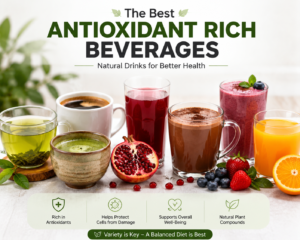
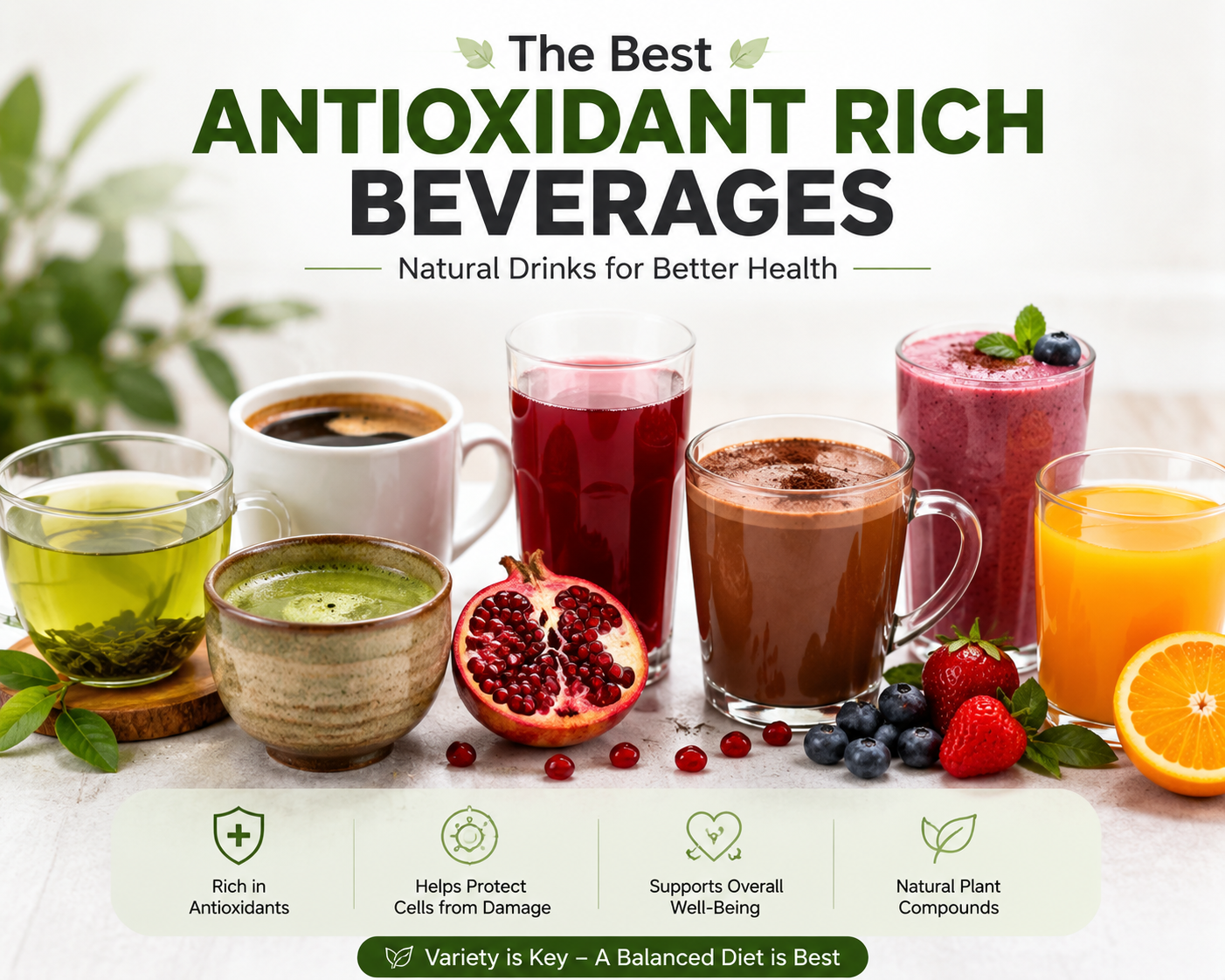
Antioxidant rich beverages can help you add protective plant compounds to your daily diet. Popular choices include green tea, matcha, coffee, pomegranate juice, cocoa, and smoothies.
These drinks provide antioxidants such as polyphenols, flavonoids, anthocyanins, and vitamin C. Antioxidants help protect cells from damage caused by unstable molecules called free radicals.
However, no single antioxidant drink offers every benefit your body may need. A varied diet remains the best way to support overall nutritional balance.
This guide will help you:
- Compare common antioxidant drinks and understand the main compounds found in each.
- Choose options with less added sugar while considering caffeine and serving size.
- Understand how different beverages can support a balanced and varied eating pattern.
What Are Antioxidant Rich Beverages?
Antioxidant rich beverages contain natural compounds that help protect cells from oxidative damage. These drinks usually come from fruits, vegetables, tea leaves, coffee, or cocoa.
Many drinks with antioxidants provide polyphenols, flavonoids, vitamins, and colourful plant pigments. Each beverage offers a different combination of beneficial compounds and important nutrients.
Common antioxidant drinks include:
- Green tea and matcha, which provide catechins and other beneficial polyphenol compounds.
- Coffee, which naturally contains chlorogenic acids and several other antioxidant compounds.
- Pomegranate and cranberry juices, which provide anthocyanins and other plant polyphenols.
- Citrus juices, which supply vitamin C alongside several naturally occurring flavonoids.
- Cocoa drinks, which contain flavanols when prepared with minimally processed cocoa powder.
- Smoothies, which combine antioxidant rich fruits, vegetables, seeds, and leafy greens.
These beverages can support antioxidant intake when included within a balanced eating pattern. Choosing minimally sweetened options also helps limit unnecessary added sugar in drinks.
What Are Antioxidants?
Antioxidants are substances that help control unstable molecules naturally produced inside your body. These unstable molecules are commonly known as free radicals and can damage cells.
Your body creates free radicals during normal metabolism and exposure to environmental stressors. Antioxidants help maintain balance by interacting with these potentially harmful reactive molecules.
Foods and beverages can provide several important dietary antioxidants, including:
- Vitamin C from citrus fruits, berries, and many fruit based beverages.
- Polyphenols from tea, coffee, cocoa, berries, grapes, and pomegranate products.
- Flavonoids found naturally in tea, cocoa, citrus fruits, and colourful berries.
- Anthocyanins responsible for red, blue, and purple colours in many fruits.
- Carotenoids commonly found within leafy greens, orange vegetables, and blended smoothies.
Common Antioxidants Found in Drinks
Different antioxidant rich drinks contain different compounds depending on their main ingredients. Understanding these compounds makes comparing beverages easier and prevents misleading health assumptions.
| Antioxidant Compound | Common Beverage Sources |
| Catechins and EGCG | Green tea and matcha |
| Anthocyanins | Pomegranate, cranberry, tart cherry, and berry smoothies |
| Polyphenols | Tea, coffee, cocoa, grapes, and pomegranate juice |
| Flavonoids | Tea, citrus juice, cocoa, and several fruit beverages |
| Chlorogenic acids | Coffee |
| Proanthocyanidins | Cranberry juice and cocoa |
| Betalains | Beetroot juice |
| Vitamin C | Orange, grapefruit, cranberry, and other citrus juices |
| Carotenoids | Vegetable smoothies and blended leafy green beverages |
No single compound determines whether one beverage is healthier than another overall. Variety remains important because different drinks provide different nutrients and plant compounds.
What Are the Best Antioxidant Rich Beverages?
The best antioxidant rich beverages provide useful plant compounds without excessive added sugar. Each option below offers a different antioxidant profile and everyday nutritional advantage.
Tea, coffee, fruit juices, cocoa, and smoothies provide several protective plant compounds. Their antioxidant content varies according to ingredients, processing methods, concentration, and preparation.
Here are twelve good antioxidant drinks worth considering within a balanced diet:
- Green tea
- Matcha tea
- Coffee
- Black tea
- Pomegranate juice
- Grape juice
- Tart cherry juice
- Cranberry juice
- Beetroot juice
- Orange and citrus juices
- Unsweetened cocoa
- Fruit and vegetable smoothies
Quick Comparison of Antioxidant Rich Drinks
| Beverage | Main Antioxidant Compounds | Key Consideration |
| Green tea | Catechins, EGCG, polyphenols | Contains caffeine |
| Matcha | EGCG, catechins, polyphenols | More concentrated than brewed tea |
| Coffee | Chlorogenic acids, polyphenols | Avoid excessive added sugar |
| Black tea | Theaflavins, thearubigins | Contains caffeine |
| Pomegranate juice | Anthocyanins, ellagitannins, polyphenols | Choose 100% juice |
| Grape juice | Anthocyanins, polyphenols | Watch serving size |
| Tart cherry juice | Anthocyanins, polyphenols | Check added sugar |
| Cranberry juice | Proanthocyanidins, anthocyanins | Choose unsweetened varieties |
| Beetroot juice | Betalains, polyphenols | Naturally contains sugars |
| Citrus juice | Vitamin C, flavonoids | Whole fruit provides more fibre |
| Cocoa | Flavanols, polyphenols | Choose minimally sweetened cocoa |
| Smoothies | Anthocyanins, carotenoids, vitamin C | Ingredients determine nutrition |
Different drinks with antioxidants provide different compounds, rather than delivering identical benefits. Rotating several options can create greater dietary variety across your weekly routine.
Unsweetened tea and coffee provide antioxidants without naturally containing significant added sugars. Fruit juices contain useful compounds, but portion size remains important for balance.
Smoothies can combine berries, leafy greens, citrus fruits, and other antioxidant rich foods. Their nutritional quality depends heavily on ingredients, portions, and added sweeteners.
1. Green Tea
Green tea is one of the most popular antioxidant rich beverages worldwide. It contains natural plant compounds that support a varied and balanced diet.
Its main antioxidants include catechins, which belong to the broader polyphenol family. One important catechin is EGCG, also called epigallocatechin gallate in scientific literature.
Green tea also provides smaller amounts of other flavonoids and beneficial compounds. Its antioxidant profile can vary depending on growing, processing, and brewing methods.
Main Antioxidants in Green Tea
Green tea contains several compounds that contribute to its antioxidant activity. These compounds work differently and appear in varying amounts between tea varieties.
Important compounds include:
- EGCG: A well known catechin found naturally in green tea leaves.
- Catechins: Polyphenol compounds commonly associated with the antioxidant properties of green tea.
- Flavonoids: Plant compounds that contribute to green tea’s overall antioxidant profile.
- Polyphenols: A broad group of protective compounds naturally present in tea leaves.
EGCG receives considerable attention because it is abundant in many green tea varieties. However, green tea contains multiple compounds rather than one single beneficial antioxidant.
How to Drink Green Tea
Green tea works well as either a hot or chilled daily beverage. Unsweetened versions help provide antioxidants without adding unnecessary sugar to your diet.
Simple ways to enjoy green tea include:
- Brew green tea with hot water and drink it without added sweeteners.
- Chill brewed tea for a refreshing antioxidant drink during warmer weather.
- Add fresh lemon juice for flavour without using sugary syrups or creamers.
- Use green tea as a base for low sugar fruit beverages.
Brewing time and water temperature can influence flavour and compound extraction. Avoid excessive sweeteners if your goal is choosing healthier antioxidant drinks.
2. Matcha Tea
Matcha is a powdered green tea made from specially grown tea leaves. It provides concentrated plant compounds because the entire leaf is consumed directly.
Like green tea, matcha contains catechins, polyphenols, and several antioxidant compounds. EGCG, or epigallocatechin gallate, is one of its best known catechins.
Matcha powder is produced from shade grown green tea before careful processing. This method helps create its distinctive colour, flavour, and concentrated nutritional profile.
What Antioxidants Are Found in Matcha?
Matcha contains several naturally occurring compounds linked with antioxidant activity. Their exact amounts can vary between products, growing conditions, and preparation methods.
Key compounds include:
- EGCG: A major catechin commonly associated with green tea and matcha.
- Polyphenols: Plant compounds that contribute to matcha’s antioxidant activity.
- Catechins: A group of flavonoids naturally present within green tea leaves.
- Vitamin C: Present in smaller amounts within some green tea products.
- Plant pigments: Natural compounds contributing to matcha’s deep green appearance.
Because matcha uses powdered leaves, it differs from traditionally brewed green tea. You consume more of the leaf material instead of only its infusion.
Is Matcha Higher in Antioxidants Than Green Tea?
Matcha can provide a more concentrated source of green tea compounds. However, antioxidant levels vary according to quality, serving size, and preparation.
A stronger concentration does not automatically make matcha better for everyone. Green tea and matcha can both fit comfortably within a balanced diet.
Easy Ways to Drink Matcha
Matcha can be prepared in several ways without adding excessive sweeteners. Simple preparation also helps preserve its natural flavour and nutritional value.
Popular options include:
- Whisk matcha powder with warm water for a traditional hot matcha.
- Pour prepared matcha over ice for a simple iced matcha drink.
- Mix matcha with milk for a lightly sweetened matcha latte.
- Add small amounts of matcha powder to smoothies or protein shakes.
Check sweetened matcha mixes carefully because some contain significant added sugar. Plain matcha powder gives you greater control over ingredients and serving size.
3. Coffee
Coffee is another popular beverage that naturally provides several antioxidant compounds. Its antioxidant profile mainly comes from polyphenols and chlorogenic acids.
Regular coffee consumption can contribute meaningfully to daily antioxidant intake for many adults. However, preparation methods strongly influence calories, sugar, and overall nutritional quality.
What Antioxidants Are Found in Coffee?
Coffee contains several bioactive compounds associated with its natural antioxidant activity. Their levels can change during roasting, brewing, and storage conditions.
Important compounds include:
- Chlorogenic acids: Major polyphenols that contribute significantly to coffee’s antioxidant properties.
- Caffeic acid: A plant compound naturally present in coffee and other foods.
- Ferulic acid: Another antioxidant compound found within coffee’s broader polyphenol profile.
- Polyphenols: Plant based compounds that support coffee’s overall antioxidant capacity.
These compounds help explain why coffee appears frequently among antioxidant rich beverages. Still, coffee should not replace fruits, vegetables, or other nutrient rich foods.
Does Coffee Provide Antioxidant Benefits?
Coffee contains compounds that help neutralize reactive molecules during normal metabolic processes. This makes coffee an important dietary antioxidant source for many regular drinkers.
Its potential benefits depend on overall diet, lifestyle, and individual health factors. Drinking coffee alone cannot compensate for poor nutrition or unhealthy daily habits.
How to Make Coffee a Healthier Antioxidant Drink
Plain coffee provides antioxidants without adding significant amounts of sugar or fat. Problems usually appear when large amounts of sweeteners and creamers are added.
Healthier options include:
- Drink black coffee when you enjoy its natural flavour without sweeteners.
- Add a small amount of milk instead of sugary flavoured creamers.
- Choose unsweetened iced coffee instead of heavily sweetened blended coffee drinks.
- Limit syrups when drinking coffee as part of your regular routine.
Coffee also contains caffeine, which affects people differently depending on sensitivity. Consider timing and portion size if caffeine affects sleep or comfort.
4. Black Tea
Black tea is another antioxidant rich beverage made from processed tea leaves. Its oxidation process creates compounds that differ from those found in green tea.
Black tea contains polyphenols, including theaflavins, thearubigins, and smaller amounts of catechins. These compounds contribute to its colour, flavour, and overall antioxidant activity.
Because black tea is widely consumed, it can support daily antioxidant intake. However, preparation choices can strongly affect its overall nutritional value.
What Antioxidants Are Found in Black Tea?
Black tea contains several plant compounds formed during tea leaf oxidation. These compounds give black tea its characteristic dark colour and stronger flavour.
Important antioxidants include:
- Theaflavins: Polyphenols created during oxidation that contribute to antioxidant activity.
- Thearubigins: Larger polyphenol compounds responsible for black tea’s darker colour.
- Catechins: Antioxidant compounds remaining in smaller amounts after tea processing.
- Flavonoids: Plant compounds that support black tea’s broader antioxidant profile.
The balance of these compounds depends on tea variety and processing. Brewing temperature and steeping time can also influence compound extraction.
Black Tea vs Green Tea for Antioxidants
Green tea contains more catechins because its leaves undergo less oxidation. Black tea develops more theaflavins and thearubigins during processing instead.
Neither tea automatically provides a better antioxidant profile for every person. Both can contribute different plant compounds within a varied daily diet.
How to Drink Black Tea
Black tea can be served hot, chilled, plain, or lightly flavoured. Unsweetened options are generally easier to include without increasing added sugar.
Simple choices include:
- Brew black tea with hot water and avoid excessive added sweeteners.
- Chill prepared tea for a refreshing unsweetened iced tea option.
- Add lemon juice for flavour without relying on sugary syrups.
- Use a small amount of milk when you prefer smoother tea.
Black tea naturally contains caffeine, although amounts vary between different products. People sensitive to caffeine should consider serving size and drinking time.
5. Pomegranate Juice
Pomegranate juice is one of the most concentrated antioxidant fruit drinks available. It contains polyphenols, anthocyanins, and ellagitannins from the fruit and seeds.
These plant compounds contribute to pomegranate juice’s deep red colour and flavour. Its antioxidant content can vary with processing, concentration, and juice quality.
What Antioxidants Are Found in Pomegranate Juice?
Pomegranate juice contains several bioactive compounds with naturally occurring antioxidant properties. These compounds work together within the fruit’s broader nutritional and phytochemical profile.
Important compounds include:
- Anthocyanins: Plant pigments responsible for pomegranate juice’s rich red and purple tones.
- Ellagitannins: Polyphenol compounds commonly found in pomegranate fruit and juice products.
- Flavonoids: Plant compounds that contribute to the beverage’s antioxidant activity.
- Vitamin C: A water soluble vitamin providing additional antioxidant support within the diet.
Pomegranate also contains other polyphenols that contribute to its antioxidant capacity. Exact levels depend on fruit variety, processing methods, and serving concentration.
Why Is Pomegranate Juice High in Antioxidants?
Pomegranate contains multiple antioxidant compounds within its seeds, juice, and surrounding tissues. Processing can transfer many of these plant compounds into the finished beverage.
This combination makes pomegranate juice a popular choice among antioxidant rich beverages. However, antioxidant concentration alone does not determine a drink’s overall nutritional quality.
How to Choose Pomegranate Juice
Choosing the right product helps reduce unnecessary sugars and misleading ingredient claims. Always check the label before selecting pomegranate juice for regular consumption.
Look for these features:
- Choose 100% pomegranate juice instead of heavily sweetened fruit drink blends.
- Check the ingredients list for syrups, added sugars, and unnecessary flavourings.
- Comp
- are serving sizes because concentrated juices can provide substantial natural sugars.
- Select products with simple ingredient lists and clearly stated juice percentages.
Pomegranate juice can fit easily within a varied and balanced eating pattern. Smaller portions also make it easier to manage calories and natural sugars.
6. Grape Juice
Grape juice is another antioxidant rich beverage made from naturally colorful grapes. Purple and red varieties provide several polyphenols linked with their rich pigmentation.
These compounds include anthocyanins, flavonoids, and other naturally occurring plant chemicals. Their amounts depend on grape variety, processing methods, and juice concentration.
What Antioxidants Are Found in Grape Juice?
Grape juice contains several antioxidant compounds concentrated within grapes and their skins. Darker grape varieties generally contain more colorful pigments than lighter grape varieties.
Important compounds include:
- Anthocyanins: Natural pigments responsible for red and purple colors in darker grapes.
- Polyphenols: Plant compounds contributing to grape juice’s overall antioxidant activity and profile.
- Flavonoids: Naturally occurring compounds found throughout grape skins, seeds, and surrounding tissues.
- Resveratrol: A polyphenol found mainly within the skins of red and purple grapes.
These bioactive compounds make grape juice useful within a varied antioxidant focused diet. However, their concentrations can differ substantially between brands and grape varieties.
Is Grape Juice a Good Antioxidant Drink?
Purple grape juice can provide several plant compounds with antioxidant properties. Its naturally occurring polyphenols make it comparable with other antioxidant fruit drinks.
However, grape juice also contains concentrated amounts of naturally occurring fruit sugars. Serving size therefore remains important when including juice within your daily diet.
Grape Juice vs Red Wine for Antioxidants
Both grape juice and red wine contain polyphenols originating from grapes. However, their composition differs because fermentation changes the final beverage significantly.
You do not need alcohol to obtain antioxidant compounds naturally found within grapes. Grape juice offers a nonalcoholic option containing several similar plant derived compounds.
How to Choose Grape Juice
Product labels can help identify better options with fewer unnecessary ingredients. Look beyond marketing claims when comparing different grape juice products.
Consider these practical tips:
- Choose 100% grape juice rather than beverages containing large amounts of added sugar.
- Select purple or red grape juice for greater anthocyanin and pigment content.
- Review serving sizes because juice provides concentrated carbohydrates and natural fruit sugars.
- Avoid products containing unnecessary syrups, artificial sweeteners, or multiple added flavorings.
Whole grapes also provide dietary fiber that regular grape juice largely lacks. Combining whole fruit with occasional juice creates greater nutritional variety overall.
7. Tart Cherry Juice
Tart cherry juice is another antioxidant rich beverage made from naturally colourful cherries. It contains anthocyanins, polyphenols, and other plant compounds with antioxidant activity.
These compounds contribute to tart cherries’ deep red colour and distinctive sour flavour. Their concentrations can vary according to cherry variety, processing, and juice concentration.
What Antioxidants Are Found in Tart Cherry Juice?
Tart cherries provide several bioactive compounds that contribute to their antioxidant properties. Anthocyanins are particularly important because they also create the fruit’s rich colour.
Important compounds include:
- Anthocyanins: Colourful plant pigments with naturally occurring antioxidant and bioactive properties.
- Polyphenols: Plant compounds contributing to the overall antioxidant profile of tart cherries.
- Flavonoids: Naturally occurring compounds found throughout cherries and many other colourful fruits.
- Vitamin C: An essential nutrient that also contributes to antioxidant defence mechanisms.
Tart cherries also contain small amounts of melatonin and the amino acid tryptophan. These compounds have encouraged research into tart cherry juice and sleep patterns.
Tart Cherry Juice for Exercise and Muscle Recovery
Tart cherry juice is frequently studied for recovery following demanding physical exercise. Researchers have examined its anthocyanins alongside markers related to inflammation and muscle recovery.
Some studies suggest tart cherry products may support recovery after strenuous physical activity. However, results depend on dosage, exercise type, participants, and study design.
Athletes should not consider tart cherry juice a replacement for balanced nutrition. Adequate protein, hydration, carbohydrates, and rest remain essential for effective exercise recovery.
Can Tart Cherry Juice Support Sleep?
Tart cherries naturally contain melatonin, which participates in regulating normal sleep cycles. They also provide tryptophan, an amino acid involved in several biological processes.
Research has explored whether tart cherry juice may influence sleep duration or quality. Evidence remains developing, so stronger clinical claims should be interpreted cautiously.
How to Choose Tart Cherry Juice
Many tart cherry products contain concentrated juice or additional sweetening ingredients. Checking labels helps you understand exactly what each serving provides.
Consider these practical points:
- Choose 100% tart cherry juice when you want fewer unnecessary added ingredients.
- Check labels carefully for added sugars, syrups, and other juice concentrates.
- Compare serving sizes because concentrated tart cherry products can contain substantial carbohydrates.
- Dilute concentrated juice with water when the manufacturer’s directions recommend doing so.
Tart cherry juice can complement other antioxidant drinks within a varied diet. It works best alongside whole fruits, vegetables, adequate hydration, and balanced meals.
8. Cranberry Juice
Cranberry juice is a tart antioxidant beverage made from naturally colorful cranberries. It provides proanthocyanidins, anthocyanins, flavanols, and vitamin C alongside other plant compounds.
These compounds contribute to cranberry juice’s antioxidant activity and distinctive red color. Their amounts vary according to cranberry variety, processing methods, and product concentration.
What Antioxidants Are Found in Cranberry Juice?
Cranberries contain several polyphenols that naturally help define their overall antioxidant profile. Proanthocyanidins are especially notable compounds found naturally within cranberry fruit and juice.
Important compounds include:
- Proanthocyanidins: Polyphenols commonly called PACs that contribute strongly to cranberry’s plant compound profile.
- Anthocyanins: Natural pigments responsible for the deep red color of ripe cranberries.
- Flavanols: Plant compounds belonging to the broader family of dietary flavonoid antioxidants.
- Vitamin C: An essential vitamin contributing to normal antioxidant protection within the body.
These bioactive compounds make cranberry juice different from many ordinary sweetened fruit beverages. However, processing and dilution can significantly change the final concentration of antioxidants.
Cranberry Juice and Urinary Tract Health
Cranberry products are commonly researched for their possible relationship with urinary tract health. Particular attention focuses on proanthocyanidins and their interactions with certain bacterial adhesion processes.
Cranberry juice should not be considered a treatment for urinary tract infections. Anyone experiencing persistent urinary symptoms should seek appropriate advice from a healthcare professional.
How to Choose Cranberry Juice
Many cranberry drinks contain added sugars or blends with sweeter fruit juices. Reading ingredient labels helps separate pure cranberry products from heavily sweetened beverages.
Consider these practical tips:
- Choose 100% cranberry juice when you prefer fewer unnecessary sweetening ingredients overall.
- Look for unsweetened cranberry juice when reducing added sugar remains important.
- Check juice percentages because cranberry cocktails often contain several additional juice ingredients.
- Compare serving sizes since concentrated juices can provide considerable natural carbohydrate amounts.
Unsweetened cranberry juice can taste significantly more tart than cranberry juice cocktails. Diluting it with sparkling water can create a lighter antioxidant rich beverage.
9. Beet Juice
Beet juice is a colorful beverage containing betalains, polyphenols, and naturally occurring nitrates. These compounds give beetroot its deep color and a distinctive earthy flavor.
Antioxidant levels can vary with beet variety, processing methods, and serving concentration. Beetroot juice also provides other nutrients that contribute to its overall nutritional profile.
What Antioxidants Are Found in Beet Juice?
Betalains are the main antioxidant pigments responsible for beets’ familiar red-purple appearance. Beetroot also provides polyphenols and other bioactive compounds alongside naturally occurring dietary nitrates.
Important compounds include:
- Betalains: Plant pigments that contribute strongly to beetroot’s distinctive antioxidant activity.
- Polyphenols: Plant compounds that support beet juice’s broader antioxidant and nutritional profile.
- Vitamin C: An essential nutrient contributing to normal antioxidant protection within the body.
- Dietary nitrates: Natural compounds involved in pathways supporting normal nitric oxide production.
Betalains and nitrates perform different biological roles despite appearing within the same beverage. Understanding this distinction helps prevent confusing antioxidant activity with nitrate-related physiological effects.
Betalains vs Nitrates: What Is the Difference?
Betalains are antioxidant pigments that help create beetroot’s intense red and purple coloring. Dietary nitrates are different compounds naturally present within beets and other vegetables.
The body can convert dietary nitrates into compounds involved with normal blood vessel function. However, nitrates should not be described as antioxidants simply because beets contain both.
Is Beet Juice a Good Antioxidant Drink?
Beet juice can provide antioxidant compounds alongside several naturally occurring plant nutrients. Its betalain content makes it distinctive among other antioxidant rich fruit beverages.
However, beet juice should complement vegetables, fruits, grains, and other nutritious foods. No single beverage can replace the benefits of a varied eating pattern.
How to Choose Beet Juice
Commercial beetroot drinks may contain added juices, sweeteners, or concentrated flavoring ingredients. Checking the label helps identify products with simpler and more transparent ingredient lists.
Consider these practical tips:
- Choose 100% beet juice when you want a product with fewer added ingredients.
- Check ingredient labels for added sugars, syrups, and unnecessary flavoring ingredients.
- Compare serving sizes because concentrated beet beverages may provide more natural sugars.
- Refrigerate opened beet juice according to the manufacturer’s storage instructions after opening.
Beet juice has a naturally strong flavor that some people find intense. Mixing smaller amounts into smoothies can provide a milder and balanced taste.
10. Orange and Other Citrus Juices
Orange and citrus juices provide vitamin C, flavonoids, and several beneficial plant compounds. These nutrients contribute to antioxidant activity while supporting a balanced daily eating pattern.
Common choices include orange juice, grapefruit juice, lemon juice, and blended citrus drinks. Their nutrient profiles vary according to fruit variety, processing, and serving concentration.
What Antioxidants Are Found in Citrus Juice?
Citrus fruits contain several antioxidant compounds naturally present within their juice and pulp. Vitamin C remains the best known antioxidant found across most citrus fruit varieties.
Important compounds include:
- Vitamin C: Supports normal antioxidant protection and several essential functions throughout the body.
- Flavonoids: Plant compounds naturally present in oranges, grapefruits, lemons, and related fruits.
- Hesperidin: A citrus flavonoid found especially in oranges and many orange juice products.
- Carotenoids: Natural pigments contributing to color and antioxidant activity in citrus fruits.
These compounds work alongside other nutrients naturally present within whole citrus fruits. Processing methods can influence their final concentrations within commercial juice products.
Is Orange Juice High in Antioxidants?
Orange juice provides vitamin C alongside flavonoids and other naturally occurring plant compounds. These nutrients make it a useful option among antioxidant rich beverages.
However, juice contains less dietary fiber than eating the whole fruit directly. Whole oranges therefore provide additional digestive benefits through their natural fiber content.
How to Choose a Better Citrus Juice
Commercial citrus beverages can contain added sugars, flavorings, or lower juice percentages. Reading nutrition labels helps identify products with simpler ingredients and better transparency.
Consider these practical tips:
- Choose 100% orange juice when avoiding unnecessary added sugars remains important.
- Check ingredient lists carefully for syrups, sweeteners, and concentrated flavoring ingredients.
- Compare serving sizes because citrus juice naturally contains concentrated fruit sugars.
- Select products containing pulp when you prefer slightly more texture and fiber.
Fresh citrus juice can also add flavor to smoothies and sparkling water. This approach increases variety without relying heavily on sweetened beverage products.
11. Unsweetened Cocoa or Hot Cocoa
Cocoa can provide flavanols, polyphenols, and other naturally occurring antioxidant compounds. These compounds are most concentrated in less processed, unsweetened cocoa powder products.
Hot cocoa can fit among antioxidant rich beverages when prepared carefully. Added sugars, syrups, and cream can quickly change its nutritional profile significantly.
What Antioxidants Are Found in Cocoa?
Cocoa contains several plant compounds that contribute to its overall antioxidant activity. Flavanols are especially important because they belong to the flavonoid family.
Important compounds include:
- Flavanols: Cocoa polyphenols that contribute strongly to its natural antioxidant activity.
- Catechins: Flavonoid compounds also present in tea and several plant foods.
- Proanthocyanidins: Polyphenol compounds naturally found within cocoa and other plant foods.
- Polyphenols: A broad group of bioactive compounds found throughout cocoa products.
Processing can reduce some naturally occurring flavanols within commercial cocoa products. Therefore, antioxidant content varies considerably between different powders and prepared beverages.
Cocoa vs Cacao for Antioxidants
Cacao generally refers to less processed products made from cacao beans. Cocoa usually undergoes additional processing before becoming powder or drinking chocolate.
Both products can provide antioxidant compounds when processing remains relatively limited. Their exact flavanol levels still vary by manufacturing methods and product quality.
How to Make a Better Antioxidant Cocoa Drink
A simple homemade cocoa drink gives greater control over sugar and ingredients. Unsweetened cocoa powder also provides flavor without heavily sweetened commercial drink mixes.
Consider these practical options:
- Mix unsweetened cocoa powder with warm milk or plant based milk.
- Add cinnamon for extra flavor without depending on sugary drink syrups.
- Use a small amount of sweetener when plain cocoa tastes too bitter.
- Avoid heavily processed mixes containing large amounts of added sugar and fillers.
Cocoa works best as part of an overall varied and balanced diet. It should not replace fruits, vegetables, tea, or other plant based foods.
12. Antioxidant Rich Smoothies
Smoothies can combine several antioxidant rich foods within one convenient and flexible beverage. Their nutritional value depends mainly on fruits, vegetables, liquids, and added ingredients.
Berries, leafy greens, citrus fruits, cocoa, and seeds provide varied antioxidant compounds. Using whole ingredients also preserves more fiber than many filtered fruit juices.
What Antioxidants Are Found in Smoothies?
The antioxidant profile of smoothies changes according to the ingredients used. Different fruits and vegetables provide distinct plant pigments, vitamins, and polyphenol compounds.
Common antioxidant sources include:
- Berries: Provide anthocyanins, vitamin C, and several naturally occurring polyphenol compounds.
- Leafy greens: Supply carotenoids, flavonoids, and other protective plant based compounds.
- Citrus fruits: Add vitamin C alongside several naturally occurring citrus flavonoids.
- Cocoa powder: Provides flavanols and other antioxidant compounds from cacao beans.
- Pomegranate: Contributes anthocyanins, ellagitannins, and several additional polyphenol compounds.
- Chia or flax seeds: Add nutrients and plant compounds alongside healthy fats.
Combining different ingredients can create a broader mixture of antioxidant compounds. Variety also improves flavor while supporting a more balanced nutritional profile.
Best Ingredients for an Antioxidant Smoothie
A balanced smoothie should combine colorful produce with useful protein and fiber. This approach improves fullness while avoiding excessive reliance on fruit sugars.
Useful ingredients include:
- Blueberries, strawberries, raspberries, or blackberries for anthocyanins and vitamin C.
- Spinach or kale for carotenoids and additional beneficial plant compounds.
- Greek yogurt for protein and a thicker, more satisfying texture.
- Unsweetened plant based milk for liquid without excessive added sugars.
- Nut butter for healthy fats, protein, and a creamier consistency.
- Matcha powder for catechins, including EGCG and other green tea polyphenols.
Example Antioxidant Smoothie Combination
A simple smoothie can provide several antioxidant compounds without requiring complicated ingredients. Blend berries, spinach, yogurt, and unsweetened milk until completely smooth and creamy.
For additional variety, add a small amount of matcha or cocoa powder. Avoid adding large amounts of syrups, honey, or sweetened fruit concentrates.
How to Make Smoothies Healthier
Some commercial smoothies contain more sugar than their healthy image might suggest. Ingredient quality and portion size therefore matter when choosing or preparing smoothies.
Consider these practical tips:
- Use whole fruits instead of relying primarily on concentrated fruit juices.
- Include vegetables to increase variety without greatly increasing natural sugar content.
- Add protein through yogurt, milk, or an appropriate protein powder.
- Choose unsweetened liquids instead of sweetened milk alternatives or fruit beverages.
- Keep portions reasonable when smoothies contain several calorie dense ingredients.
Antioxidant rich smoothies can complement meals when ingredients remain balanced and varied. They also offer an easy way to combine several plant compounds together.
Which Drink Has the Most Antioxidants?
There is no single beverage that always contains the highest antioxidant concentration. Results vary depending on ingredients, processing methods, serving size, and laboratory testing.
Some drinks repeatedly show strong antioxidant profiles across nutrition and food research. These include green tea, coffee, pomegranate juice, grape juice, and cocoa beverages.
However, comparing different beverages directly can sometimes create misleading conclusions for readers. Antioxidant measurements do not always reflect how compounds behave after human digestion.
Several factors influence the final antioxidant content found within a beverage:
- Plant variety can change the amount of polyphenols and natural pigments significantly.
- Processing methods may preserve, reduce, or transform certain antioxidant compounds during production.
- Brewing strength can alter antioxidant concentration in tea and coffee beverages considerably.
- Serving size affects how much of each compound someone actually consumes daily.
- Testing methods can produce different antioxidant values for identical beverage samples.
Is There One Best Antioxidant Drink?
No single antioxidant drink provides every beneficial compound found across plant foods. Different beverages contain different polyphenols, vitamins, pigments, and other bioactive compounds.
Green tea and matcha provide catechins, including the widely researched compound EGCG. Coffee supplies chlorogenic acids alongside several other naturally occurring plant polyphenols.
Pomegranate juice provides anthocyanins, ellagitannins, and additional antioxidant rich plant compounds. Cocoa offers flavanols, while citrus beverages provide vitamin C and flavonoids.
Choosing several antioxidant rich beverages creates more dietary variety than choosing one. Variety also helps provide different nutrients alongside multiple beneficial plant compound groups.
The best choice therefore depends on your diet, preferences, and caffeine tolerance. Added sugar, portion size, and overall eating habits should also influence decisions.
How to Choose a Healthy Antioxidant Drink
A healthy antioxidant drink should provide useful compounds without excessive added sugars. Ingredient quality, serving size, caffeine, and processing all influence its nutritional value.
Choosing wisely helps you gain antioxidants while avoiding unnecessary calories and sweeteners. The best option depends on your needs, preferences, and overall eating pattern.
Look for 100% Juice When Choosing Fruit Juice
Fruit juices can provide vitamin C, polyphenols, anthocyanins, and other plant compounds. However, many commercial drinks contain added sugars or very low juice percentages.
Check the label carefully before choosing an antioxidant juice drink regularly. A simple ingredient list usually makes the product easier to evaluate.
Consider these points:
- Choose 100% fruit juice instead of heavily sweetened juice drink products.
- Check juice percentages when comparing blends containing several different fruit sources.
- Avoid products listing syrups or added sugars among major ingredients.
- Compare serving sizes because juice contains concentrated natural sugars and calories.
Whole fruit still provides more fiber than most filtered fruit juices. Therefore, juice should complement rather than completely replace whole fruit intake.
Limit Added Sugar
Added sugar can quickly reduce the nutritional value of otherwise healthy beverages. Sweetened teas, coffee drinks, cocoa mixes, and juices deserve careful label checks.
Frequent high sugar intake can also increase total daily calorie consumption significantly. Choosing unsweetened drinks gives you greater control over sweetness and portions.
Useful strategies include:
- Select unsweetened tea, coffee, cocoa, and cranberry juice whenever possible.
- Add small amounts of sweetener instead of using pre-sweetened drink mixes.
- Avoid flavored syrups that add sugar without improving antioxidant content.
- Compare labels because similar drinks can contain very different sugar amounts.
Consider Caffeine
Several antioxidant rich beverages naturally contain caffeine in meaningful amounts. Coffee, green tea, black tea, and matcha can affect sensitive individuals differently.
Caffeine tolerance varies depending on age, habits, medications, and individual sensitivity. Timing also matters because late intake may interfere with normal sleep patterns.
Consider these practical steps:
- Choose smaller portions when you are particularly sensitive to caffeine.
- Drink caffeinated beverages earlier if they regularly disturb your sleep.
- Alternate caffeinated drinks with caffeine-free antioxidant beverage options during the day.
- Check serving sizes because caffeine levels differ widely between prepared drinks.
Whole Fruit vs Fruit Juice
Whole fruit provides antioxidants alongside fiber, water, vitamins, and important minerals. Fruit juice contains many useful compounds but removes much natural fiber.
Fiber supports fullness and slows how quickly naturally occurring sugars are consumed. This makes whole fruit valuable even when juice fits your diet.
A balanced approach may include:
- Eat whole berries, grapes, oranges, and pomegranates regularly when available.
- Use juice in moderate portions rather than drinking several servings daily.
- Blend whole fruit into smoothies when you want more fiber retention.
- Combine fruit beverages with meals instead of relying on drinks alone.
Food and Drinks vs Antioxidant Supplements
Foods and beverages provide antioxidants within complex mixtures of naturally occurring nutrients. Supplements often provide isolated compounds at much higher concentrated amounts instead.
Higher doses do not automatically mean greater health benefits for everyone. Antioxidant supplements can also interact with medications or certain medical treatments.
For most people, food-first choices remain a practical everyday nutritional approach. Discuss supplements with a qualified healthcare professional when specific concerns apply.
Can Energy Drinks With Vitamins and Antioxidants Be Healthy?
Some energy drinks contain vitamins, plant extracts, and added antioxidant compounds. However, these ingredients do not automatically make every energy drink healthy.
Many products also contain caffeine, added sugars, sweeteners, and other stimulants. These ingredients can change the drink’s overall nutritional value significantly.
An energy drink with vitamins and antioxidants should therefore be judged completely. Looking at one attractive ingredient can create a misleading nutritional impression.
What Should You Check on the Label?
The nutrition label provides useful information about sugars, caffeine, vitamins, and serving sizes. Ingredient lists also reveal sweeteners, plant extracts, and added functional compounds.
Focus on these details before choosing a product:
- Check added sugar amounts because some energy drinks contain very high levels.
- Review caffeine content and compare it with your usual daily intake.
- Look for clearly listed vitamins instead of relying on broad marketing claims.
- Check serving sizes because one container may include multiple listed servings.
- Avoid assuming added antioxidants make a heavily sweetened drink nutritionally balanced.
- Review herbal ingredients carefully when you take medications or supplements regularly.
Do Added Vitamins Make Energy Drinks Healthier?
Added vitamins can increase the nutrient content shown on product labels. However, more vitamins do not always create a healthier beverage overall.
Many people already obtain common vitamins through food and fortified products. Excessive amounts may provide little additional value when dietary needs are satisfied.
A better approach considers the whole drink rather than isolated nutrients. Sugar, caffeine, calories, and ingredient quality all deserve equal attention.
Are Antioxidant Energy Drinks Better Than Tea or Coffee?
Tea and coffee naturally contain polyphenols and other antioxidant plant compounds. They can also be consumed without significant added sugar or extra ingredients.
Energy drinks may contain added vitamins or antioxidant extracts alongside stimulants. This makes direct comparisons difficult because their formulations vary widely between products.
For everyday antioxidant intake, simpler beverages are often easier to evaluate. Green tea, coffee, cocoa, and fruit beverages have clearer nutritional profiles.
How to Choose a Better Energy Drink
If you regularly use energy drinks, compare several products before deciding. Choose options that match your caffeine tolerance and broader nutritional goals.
Helpful choices include:
- Select products with lower added sugar when several similar options exist.
- Avoid combining multiple caffeinated drinks within a short daily period.
- Choose smaller servings when you only need a moderate caffeine amount.
- Drink water regularly instead of depending entirely on functional beverage products.
The phrase “contains antioxidants” should not be treated as a health guarantee. Overall ingredients and consumption patterns matter more than one marketing claim.
How to Get More Antioxidants From Drinks Without Overdoing Juice
You can boost antioxidant intake without drinking large amounts of fruit juice. Simple beverage choices can provide variety while keeping added sugars under control.
Tea, coffee, cocoa, and smoothies all contribute different beneficial plant compounds. Rotating several options also prevents dependence on one drink for antioxidants.
Choose Unsweetened Tea More Often
Green tea and black tea provide polyphenols without naturally containing much sugar. Drinking them unsweetened keeps calories low while preserving their natural flavor.
Matcha can also increase antioxidant intake through concentrated green tea compounds. Plain matcha works well when prepared without heavily sweetened syrups or mixes.
Use Whole Fruits in Smoothies
Smoothies can provide antioxidants while retaining more fiber from whole fruits. Berries, citrus fruits, and leafy greens work especially well in blended drinks.
Useful combinations include:
- Blend berries with Greek yogurt and unsweetened milk for balanced nutrition.
- Add spinach or kale for carotenoids and additional plant compounds.
- Include citrus fruit for vitamin C and naturally occurring flavonoids.
- Use matcha or cocoa powder for extra polyphenols without much sweetness.
Keep Fruit Juice Portions Moderate
Fruit juice can provide useful antioxidants, vitamins, and colorful plant compounds. However, larger servings also deliver more concentrated natural sugars and calories.
Use smaller portions alongside meals instead of relying on juice throughout daytime. Whole fruits should remain an important part of regular antioxidant intake.
Drink Coffee Without Excessive Additions
Coffee naturally contains chlorogenic acids and several other antioxidant plant compounds. Heavy syrups and creamers can quickly increase sugar and calorie intake.
Choose plain coffee or lightly sweetened versions when possible during regular consumption. Milk can add creaminess without requiring large amounts of flavored syrup.
Make Cocoa With Less Sugar
Unsweetened cocoa provides flavanols and other polyphenols found naturally within cacao beans. Preparing cocoa at home gives better control over added sugar amounts.
Use milk or plant based milk with unsweetened cocoa powder for simplicity. Add only enough sweetener to balance bitterness without making drinks excessively sugary.
Build Variety Across the Week
Different antioxidant rich beverages provide different vitamins, pigments, and polyphenol compounds. Variety helps broaden your intake instead of chasing one supposedly superior drink.
A balanced weekly approach might include:
- Green tea or matcha on several mornings for catechins and polyphenols.
- Coffee in moderate amounts when caffeine fits your personal tolerance.
- Small juice servings alongside meals rather than throughout the entire day.
- Berry smoothies using whole fruit for antioxidants, fiber, and additional nutrients.
- Unsweetened cocoa occasionally for flavanols and a different beverage option.
Antioxidant drinks work best alongside vegetables, fruits, legumes, nuts, and whole grains. Together, these foods provide broader nutrition than beverages can provide alone.
Antioxidant Rich Drinks vs Antioxidant Rich Foods
Antioxidant rich drinks can support your diet, but whole foods offer broader nutrition. Fruits, vegetables, nuts, seeds, and legumes provide antioxidants alongside fiber and minerals.
Beverages can make antioxidant intake easier when chosen carefully throughout the day. However, they should complement meals rather than replace nutrient dense foods entirely.
What Do Antioxidant Rich Foods Provide?
Whole foods contain complex combinations of vitamins, minerals, fiber, and plant compounds. These nutrients work together within foods instead of appearing as isolated ingredients.
Common antioxidant rich foods include:
- Berries: Provide anthocyanins, vitamin C, fiber, and several naturally occurring polyphenols.
- Leafy greens: Supply carotenoids, flavonoids, vitamins, minerals, and useful dietary fiber.
- Nuts and seeds: Contribute vitamin E, polyphenols, healthy fats, and important minerals.
- Legumes: Provide polyphenols, fiber, protein, and several essential micronutrients for balanced nutrition.
- Colorful vegetables: Supply carotenoids, vitamin C, flavonoids, and diverse plant pigments.
- Whole grains: Contain phenolic compounds, minerals, fiber, and several beneficial plant nutrients.
These foods also require chewing, which can improve fullness during regular meals. Their fiber content gives them nutritional advantages over many filtered beverage options.
Are Antioxidant Drinks Better Than Foods?
Antioxidant drinks are not automatically better than antioxidant rich foods overall. Each option offers different benefits depending on ingredients, preparation, and serving size.
Green tea, coffee, and cocoa provide compounds that foods may contain differently. Fruit juices deliver antioxidants quickly, but usually contain much less dietary fiber.
Whole foods generally provide greater nutritional variety within each serving consumed. Drinks remain useful when they add variety without replacing balanced meals regularly.
When Can Antioxidant Beverages Be Helpful?
Antioxidant beverages can fit naturally into meals, snacks, and daily routines. They may also provide convenient options when whole foods are less practical.
Helpful examples include:
- Drinking green tea with breakfast instead of choosing a heavily sweetened beverage.
- Adding berries and spinach to smoothies for fiber and plant compounds.
- Choosing pomegranate juice occasionally alongside meals instead of larger sugary drinks.
- Drinking unsweetened cocoa when you want another source of dietary polyphenols.
The healthiest approach combines antioxidant drinks with many antioxidant rich foods. This creates broader nutrient coverage while supporting variety across your overall diet.
Frequently Asked Questions
These questions address common searches about antioxidant drinks, juices, tea, coffee, and supplements. Each answer gives practical guidance without overstating possible health benefits or nutritional effects.
What Drink Is Highest in Antioxidants?
No single drink consistently ranks highest because antioxidant measurements vary between different testing methods. Pomegranate juice, green tea, coffee, cocoa, and grape juice often show strong profiles.
Processing, concentration, preparation, and serving size can change measured antioxidant levels substantially. Dietary variety matters more than choosing one supposedly superior antioxidant beverage every day.
What Are the Best Antioxidant Drinks?
Several drinks provide meaningful amounts of naturally occurring antioxidant compounds and important nutrients. Popular choices include green tea, matcha, coffee, cocoa, and pomegranate juice.
Other useful options include:
- Tart cherry juice
- Cranberry juice
- Purple grape juice
- Beetroot juice
- Orange juice
- Berry smoothies
The best antioxidant drink depends on sugar content, caffeine tolerance, and preferences. Choosing different beverages provides more variety across your overall eating pattern.
What Juice Is High in Antioxidants?
Pomegranate, grape, cranberry, and tart cherry juices contain several antioxidant plant compounds. Orange juice also supplies vitamin C alongside naturally occurring citrus flavonoids.
Choose 100% juice when possible and check labels for unnecessary added sugars. Portion size still matters because fruit juice contains concentrated naturally occurring carbohydrates.
Is Coffee High in Antioxidants?
Coffee contains chlorogenic acids, caffeic acid, and several other naturally occurring polyphenols. These compounds contribute significantly to coffee’s overall antioxidant activity and nutritional profile.
Plain coffee can provide antioxidants without adding substantial sugar or additional calories. Sweetened syrups and heavy creamers can change the beverage’s nutritional value considerably.
Is Green Tea an Antioxidant Rich Beverage?
Yes, green tea contains catechins, flavonoids, and several other important polyphenol compounds. EGCG is one particularly well known catechin naturally present within green tea leaves.
Antioxidant concentrations vary according to tea quality, brewing temperature, and steeping duration. Unsweetened green tea provides these compounds without substantial amounts of added sugar.
Is Matcha Higher in Antioxidants Than Green Tea?
Matcha can provide concentrated green tea compounds because powdered leaves are consumed directly. Regular green tea is brewed before the leaves are removed from water.
However, exact antioxidant levels depend on quality, preparation, concentration, and serving size. Both beverages can contribute useful polyphenols within a varied and balanced diet.
Does Cranberry Juice Have Antioxidants?
Cranberry juice provides proanthocyanidins, anthocyanins, vitamin C, and other beneficial polyphenols. These compounds contribute to cranberries’ distinctive color and naturally occurring antioxidant activity.
Choose unsweetened or 100% cranberry juice when limiting added sugar remains important. Cranberry juice should complement whole fruits rather than replacing them entirely.
Is Pomegranate Juice High in Antioxidants?
Pomegranate juice contains anthocyanins, ellagitannins, flavonoids, and several other polyphenol compounds. These compounds contribute strongly to its deep color and antioxidant rich profile.
Its concentration varies depending on processing methods, fruit varieties, and product formulations. Selecting 100% pomegranate juice can help avoid unnecessary sweeteners and added ingredients.
Can You Drink Antioxidant Beverages Every Day?
Many antioxidant rich beverages can fit comfortably within an everyday balanced diet. However, frequency should consider caffeine, sugar, calories, and individual health requirements.
Good daily choices may include:
- Unsweetened green or black tea
- Moderate coffee servings
- Whole fruit smoothies
- Small portions of 100% juice
- Unsweetened cocoa drinks
Rotating several beverages helps provide different nutrients and naturally occurring plant compounds. Water should still remain your primary drink for maintaining everyday hydration needs.
Are Antioxidant Drinks Better Than Antioxidant Supplements?
Antioxidant drinks provide plant compounds alongside naturally occurring nutrients and other food components. Supplements often contain isolated antioxidants at considerably higher and more concentrated doses.
Higher doses do not automatically provide greater benefits for every individual. Food and beverages generally offer a more practical approach for everyday nutrition.
What Should I Look for in an Antioxidant Drink?
Look beyond marketing claims and evaluate the beverage’s complete nutrition information carefully. Antioxidant content matters, but sugar, caffeine, serving size, and ingredients matter too.
When comparing products, consider:
- Minimal added sugars
- Clearly listed ingredients
- Appropriate serving sizes
- Moderate caffeine levels
- Whole fruit ingredients when possible
- Simple formulations without unnecessary sweeteners
A strong antioxidant label does not automatically make any beverage nutritionally superior. Choose options that fit comfortably within your broader eating and drinking habits.